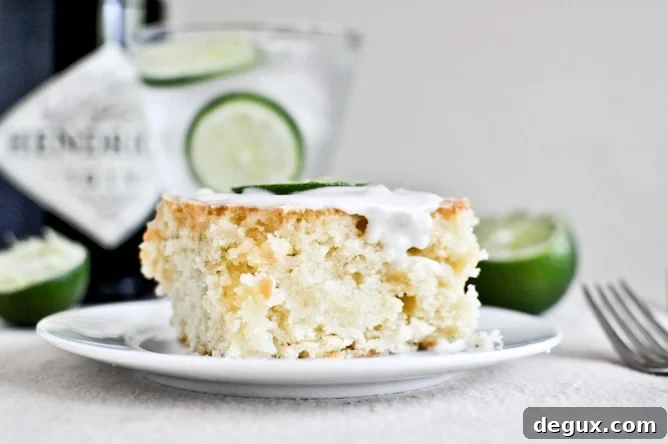
Gin and Tonic Layer Cake with Zesty Lime and Juniper Frosting
You may recall that last week I judged a small dessert competition. Times are tough.
That night I came home and ate a totally unnecessary grilled cheese. Not important, but relevant to the story: one of the desserts at the contest was a gin and tonic cake. It was tucked among the other sweets, and while it was incredible—super moist and soft and actually boozy enough to make an impression—I was too full at the event to give it the attention it deserved. Then I came home and couldn’t stop thinking about it.
I decided to recreate it, guessing the cake base was lime. I adapted a lemon-lime cake I made last spring, poured a gin glaze over the warm cake, and finished it with a gin icing once it cooled. Sugar and gin—my new favorite combo.
I brought half the cake to a family party for my grandfather’s birthday (writing about food for strangers on the internet tends to make portions disappear fast). The verdict was mixed but enthusiastic. Some guests noticed the gin immediately and called it strong—intensely so for those who don’t drink gin often. Others, particularly a seasoned gin drinker (my grandfather), said it didn’t taste much like gin and preferred the actual cocktail. Opinions varied depending on personal gin tolerance and experience: one relative who had a notorious college gin incident was put off, while my mom, who usually drinks bourbon, happily ate slices for breakfast the next day.
The cake is delightful: fluffy, soft, and drenched with gin glaze so that it stays beautifully moist. It’s similar in spirit to the old-fashioned poke cake—holes are made in the warm cake so the glaze seeps in. The lime base brightens the flavor and complements the botanicals in the gin. That said, how much gin you can taste depends entirely on your palate. I recommend starting the glazes with 1–2 tablespoons of gin and tasting as you go. We loved the pronounced gin flavor, but it may be too intense for some.
If gin is a trigger for you because of past experiences, skip the boozy version and try a lime-forward cake without the spirit. Otherwise, this is an excellent way to enjoy gin in dessert form.
Gin and Tonic Cake
adapted from my lemon-lime cake; makes one large 9×13 pan
Ingredients:
3 cups all-purpose flour
2 teaspoons baking powder
1/4 teaspoon salt
1 cup unsalted butter, room temperature
1 3/4 cups granulated sugar
4 large eggs
2 teaspoons vanilla extract
1 1/2 tablespoons freshly zested lime rind
1/4 cup gin
1/4 cup milk
juice of 1 lime
Instructions:
Preheat the oven to 350°F. Whisk the flour, baking powder, and salt together and set aside.
In the bowl of an electric mixer, beat the butter until creamy. Add the sugar and beat on medium-high until light and fluffy, about five minutes, scraping the bowl as needed. Add eggs one at a time, beating until each is incorporated. Mix in the vanilla and lime zest.
With the mixer on low, add half the dry ingredients, then add the gin, milk, and lime juice and mix until combined. Add the remaining flour and stir until just combined. Pour the batter into a greased 9×13 pan and bake 35–40 minutes, until the top is golden and the center is set. Remove from the oven and immediately poke holes all over the top with a toothpick or fork. Pour the gin glaze over the warm cake and let it soak in. Allow the cake to cool completely, then spread the gin icing. Note: you can substitute tonic water for part or all of the gin/milk in the cake if you prefer a milder flavor.
Gin Glaze
1 3/4 cups powdered sugar
5 tablespoons gin (start with 1–2 tablespoons and taste; add tonic water, milk, or cream if you need more liquid)
juice of 1 lime
Mix until smooth and pour over the warm cake so it soaks into the holes. Adjust gin to taste; you can use tonic water to dilute the alcohol while preserving the flavor profile.
Gin Icing
2 1/2 cups powdered sugar
2–3 tablespoons gin (start with 1–2 tablespoons and add tonic, milk, or cream if needed)
a drop of vanilla extract
Whisk until you have a thick but spreadable icing. Once the cake is completely cool, spread a thin layer of icing over the top. If you want less alcohol forward frosting, substitute some or all of the gin with tonic water.
Now I’m fantasizing about a loaf of bread to soak up the remaining gin.